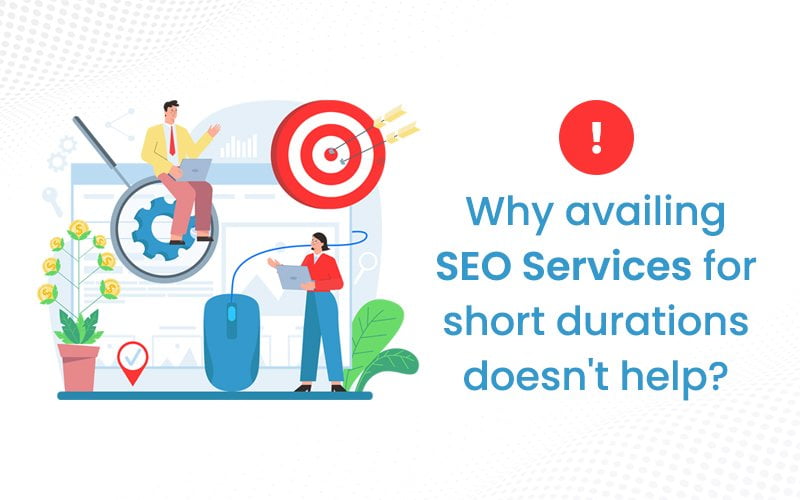
There is a conversation that SEO professionals have with business owners more often than almost any other. It typically goes like this: a business invests in SEO services for two or three months, sees the early signs of progress — some keyword movements, a small uptick in traffic — and then decides to pause or cancel, assuming the work is done, or that results will hold on their own.
A few months later, the rankings that took months to build have quietly eroded. The organic traffic that was beginning to grow has retreated. Competitors who continued their SEO effort have claimed the positions that were briefly within reach.
This is not bad luck. It is the predictable outcome of treating SEO as a short-term project rather than the long-term investment it fundamentally is.
When it comes to ranking on the top pages of search engines, SEO is one of the most cost-effective and sustainable marketing channels available — but only when it is maintained consistently. There is a widespread misconception that a few months of SEO activity is enough to establish lasting rankings. In reality, short-duration SEO campaigns rarely produce meaningful results and even when they produce early gains, those gains begin to reverse the moment active optimisation stops.
Understanding why this happens — mechanically, not just in principle — is important for any business making decisions about their digital marketing investment. This blog breaks it down clearly.

What Causes SEO to Take So Long?
SEO timelines are not arbitrary. The time it takes to see meaningful results is a direct consequence of how search engines evaluate, trust and rank websites. Here are the core mechanical reasons:
1. Domain Authority and Trust Take Time to Build
Google does not rank websites — it ranks pages within the context of an overall domain. A newer domain or one with limited backlink history starts with low authority. Authority is earned incrementally through consistent content publication, quality backlink acquisition, user engagement signals and technical soundness. There are no shortcuts to domain authority that Google’s systems have not already learned to discount or penalise. Building genuine authority takes months of consistent work — which means a 2–3 month SEO campaign barely scratches the surface.
2. Link Acquisition Is Slow by Nature
Backlinks — links from other credible websites pointing to yours — remain one of the strongest ranking signals in Google’s algorithm. Earning high-quality backlinks requires producing content worth linking to, conducting outreach, building relationships with publishers and waiting for those links to be discovered and weighted by Google’s crawlers. A short-term campaign does not allow enough time for a meaningful backlink profile to develop. And when SEO activity stops, no new links are being built — while competitors continue accumulating them.
3. Content Must Earn Google’s Trust Before It Ranks
When new content is published on a website, it does not rank immediately. Google’s crawlers must discover it, index it, evaluate its quality and relevance, observe how users interact with it and compare it against the existing content ranking for those terms. This evaluation process — sometimes called the “Google Sandbox” effect for newer domains — can take weeks or months before a page earns a stable position in search results. Short-term SEO campaigns often end just as this process is beginning to produce results.
4. Google’s Algorithm Updates Create Moving Targets
Google updates its core ranking algorithm multiple times per year, with hundreds of smaller adjustments running continuously. Each update can reshuffle rankings — rewarding websites that have been consistently optimised and penalising those that have been neglected. A business that runs SEO for three months and then stops is essentially frozen in time while the algorithm continues evolving around it. Long-term SEO means continuously adapting to these changes — something that is impossible in a short engagement.
5. The Legacy of Black-Hat Shortcuts
In the early years of SEO, businesses could achieve fast rankings through tactics like keyword stuffing, spammy link schemes and duplicate content. Google’s algorithm has since become sophisticated enough to not only ignore these tactics but to actively penalise websites that employ them. This means that anyone promising “fast rankings” through short-duration SEO is typically relying on techniques that will either have no effect or cause ranking penalties that take considerable time and effort to recover from.
What Actually Happens to Your Rankings When SEO Stops?
This is the question the original premise of this post is built around — and it deserves a thorough answer.
Rankings are not a static state you achieve and keep. They are a dynamic, continuously contested position on a competitive leaderboard. Every keyword you rank for is also being targeted by your competitors, many of whom are running ongoing SEO campaigns. When you stop, they do not.
Here is what typically unfolds when SEO activity ceases:
Month 1–2: Stability Rankings largely hold in the short term. The momentum from recent optimisation activity, content publication and link building keeps positions relatively stable. This period often gives businesses a false sense of security — “we stopped SEO three months ago and our rankings are fine.”
Month 3–4: Gradual Erosion Competitors who are actively publishing new content, earning new backlinks and optimising their pages begin to outpace your static site. Google’s freshness signals start to discount pages that have not been updated. Minor algorithm updates begin to create small ranking slippage that may not be immediately noticeable in traffic numbers but is visible in position tracking.
Month 5–6: Accelerating Decline Ranking positions for competitive terms begin to drop more visibly. Organic traffic starts declining. The compounding effect of months of competitor activity — new content, new backlinks, improved technical performance — is now materially outweighing the historic work done during your SEO engagement.
Month 6–12+: Significant Loss For most businesses in competitive niches, a year without active SEO means returning to close to where they started — or worse, if competitors have used the period to significantly strengthen their own positions. The work required to recover those rankings now typically exceeds the total investment that would have been required to maintain them continuously.
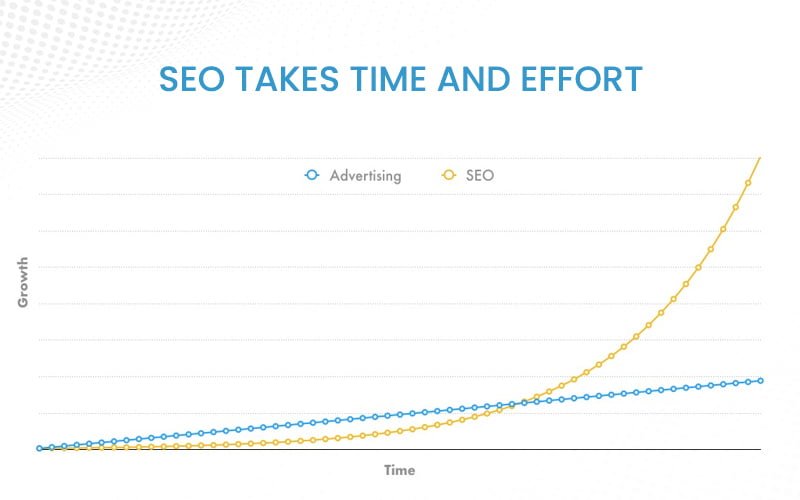
The cost of stopping SEO and restarting is almost always higher than the cost of never having stopped. This is the compounding nature of SEO — and it works both ways. Consistent investment compounds into growing returns. Inconsistent investment resets the compounding clock every time it restarts.
When Should You Expect SEO to Give Results?
SEO timelines vary based on several factors and understanding those variables helps businesses set realistic expectations and make better investment decisions.
Low-competition keywords and local searches: 3–6 months For businesses targeting specific geographic areas or niche industries with lower search competition — such as a specialised service in a mid-tier city — meaningful ranking improvements and measurable traffic increases can often be seen within 3 to 6 months of consistent, well-executed SEO work. Local SEO, in particular, can show results faster because the competition pool is smaller.
Moderate-competition keywords: 6–12 months Most small and medium businesses targeting regional or industry-level keywords sit in this range. The first 3 months typically involve foundational work — technical fixes, content creation, initial link building. Results begin materialising from month 4 onwards, with more consistent traffic improvements visible by months 6–9.
High-competition keywords and national/global markets: 12–24+ months For businesses targeting highly competitive national keywords — “SEO company in India,” “best accounting software,” “eCommerce website design” — achieving and sustaining first-page rankings requires a sustained, multi-year commitment. The businesses that dominate these terms have typically been building their authority for years. Competing with them requires a long-term plan, consistent execution and patience.
Factors that influence how quickly results appear:
- Domain age and history — An established domain with a clean history ranks faster than a brand-new one
- Existing content quality — A site with some pre-existing optimised content has a head start over one being built from scratch
- Technical SEO health — Sites with crawlability issues, slow load times, or mobile problems see slower results until those issues are resolved
- Backlink profile — A site with an existing base of quality backlinks accelerates faster than one with no backlinks
- Content publication frequency — Sites that publish consistently give Google more to index and more signals to evaluate
- Competitor SEO investment — In markets where every competitor is running aggressive SEO, progress takes longer; in markets where competitors are SEO-passive, results can come faster
The important thing to understand is that these timelines are for sustainable results — rankings that hold and grow over time. Short-term tactics can produce faster apparent movement, but that movement rarely lasts and often creates problems that take longer to fix than the shortcut was worth.
Short-Term SEO vs Long-Term SEO: What Each Actually Delivers
| Short-Term SEO (1–3 months) | Long-Term SEO (6+ months ongoing) | |
|---|---|---|
| Typical tactics | Quick technical fixes, basic on-page edits, thin content | Comprehensive technical audit, deep content strategy, sustained link building |
| Keyword targeting | Low-hanging fruit only | Full keyword mapping across the buyer journey |
| Results timeline | Minimal to no visible results | Measurable traffic and ranking growth from month 4–6 |
| Result durability | Results fade within months of stopping | Rankings compound and strengthen over time |
| Risk level | High — shortcuts attract penalties | Low — sustainable best practices |
| Cost over 12 months | Higher (stop/start cycles cost more to rebuild) | Lower per meaningful result achieved |
| Competitor impact | Competitors continue building while you pause | Consistent effort builds compounding advantage |
| Best for | Nothing — even quick wins need maintenance | All businesses serious about organic growth |
The table makes clear that short-term SEO is not a cost-saving measure it is a more expensive way to achieve fewer results. The businesses that achieve the strongest organic positions are almost always those that have treated SEO as a consistent, ongoing investment rather than a periodic project.
Why Businesses Stop SEO Too Early — and What to Do Instead
Understanding the common reasons businesses prematurely end their SEO engagement helps avoid the cycle of stop-start investment that costs more and achieves less.
“We are not seeing results fast enough” This is the most common reason — and it reflects a mismatch between expectation and reality rather than a failure of the strategy. SEO results in the first 1–3 months are largely invisible on the surface, because most of the foundational work (technical fixes, content structure, initial link building) is building the infrastructure that rankings will grow from. Abandoning at this stage is like stopping construction of a building after laying the foundation.
What to do instead: Set realistic milestones with your SEO partner from the outset. Month 1–2 milestones should focus on technical health improvements, keyword mapping and content production not ranking jumps. Traffic and ranking metrics become meaningful measurement tools from month 4 onwards.
“We reached Page 1 so we stopped” Reaching Page 1 is not the finish line, it is the starting line for competitive maintenance. The moment active SEO stops, the advantage that earned that position begins eroding. Competitors observe your ranking, intensify their own efforts to displace you and in a matter of months, the position is lost.
What to do instead: Treat reaching Page 1 as the point at which your SEO investment starts delivering its highest return, not as the signal to stop. Maintenance SEO is typically less intensive and less costly than the initial build, but it is essential.
“Our budget was cut” Budget constraints are a real business reality. When marketing budgets are under pressure, SEO is often the first line item reduced because its results are not as immediately visible as paid advertising.
What to do instead: Rather than stopping SEO entirely, discuss a reduced-scope maintenance plan with your agency. Even a modest ongoing investment in content updates, backlink monitoring and technical health checks preserves the rankings already earned — and is far less costly than rebuilding them from scratch later.
“We switched providers and there was a gap” Transitions between SEO agencies often create gaps of 2–3 months where no active work is being done. During that period, the same erosion dynamic described above begins to take effect.
What to do instead: Plan transitions so that the new provider begins work before the previous engagement fully ends. A short overlap period is a worthwhile investment to preserve momentum.
What a Long-Term SEO Strategy Actually Looks Like Month by Month
Many businesses do not have a clear picture of what ongoing SEO work actually involves — which makes it easier to perceive it as an expendable cost rather than an active value driver. Here is a transparent breakdown:
Months 1–2: Foundation
- Comprehensive technical SEO audit and remediation (site speed, mobile, crawlability, canonical issues)
- Keyword research and mapping — identifying the full set of terms to target across the buyer journey
- Competitor analysis understanding what the top-ranking sites are doing and building a strategy to compete
- On-page optimisation of core service and product pages
- Google Search Console and Analytics setup and baseline reporting
Months 3–4: Content and Authority Building
- Publication of optimised blog content targeting informational and long-tail keywords
- Initial link building outreach — identifying and pursuing quality backlink opportunities
- Local SEO work, Google Business Profile optimisation, citation building, review strategy
- Internal linking improvements to channel authority to key pages
- First reporting cycle, early traffic and ranking trends begin to be visible
Months 5–6: Momentum
- Continued content publication and optimisation of underperforming pages
- Expanding backlink profile through guest posts, digital PR and directory submissions
- Schema markup and structured data implementation
- Core Web Vitals monitoring and improvements
- Ranking movement becomes measurable; organic traffic growth becomes visible in analytics
Months 6–12: Compounding Returns
- Ranking improvements on primary target keywords translate into sustained traffic growth
- Content assets begin earning organic backlinks without active outreach
- Expanding keyword coverage, new content targets secondary and long-tail terms
- Conversion rate optimisation on high-traffic landing pages
- Monthly reporting shows clear correlation between SEO investment and lead/enquiry growth
Year 2 and Beyond: Competitive Dominance
- Domain authority compounds — new content ranks faster and for more competitive terms
- Organic channel delivers a growing share of total leads at decreasing cost per acquisition
- SEO becomes a defensible competitive moat — difficult for newer competitors to replicate quickly
Wrap Up:
SEO is not a campaign you run and finish, it is a channel you build and maintain. The businesses that achieve the strongest organic search positions are almost universally those that have invested consistently over years, not intermittently over months. The rankings they hold are not lucky, they are the compounded result of sustained, disciplined effort that short-term competitors simply cannot replicate quickly.
For a business evaluating its SEO investment, the question is not “can we afford to do SEO long-term?” it is “can we afford not to?” Every month without active SEO is a month in which competitors are building the advantage that will be increasingly expensive to overcome later.
Digital Hive works with businesses across India to build sustainable, long-term SEO strategies that produce compounding organic growth. If you are ready to invest in SEO the right way, with clear milestones, transparent reporting and a commitment to lasting results, explore our SEO packages or contact our team today for a free consultation.
FAQs
Long-term SEO services help businesses build sustainable search rankings, improve website authority and generate consistent organic traffic over time.
Short-term SEO may provide temporary improvements, but lasting search visibility requires continuous optimization, content updates and technical improvements.
SEO generally takes a few months to show measurable improvements, depending on competition, website condition, keyword difficulty and industry trends.
Google regularly updates its algorithms, making continuous SEO essential for maintaining rankings and staying competitive.
Stopping SEO services can gradually reduce rankings, website traffic, keyword visibility and lead generation as competitors continue optimizing their websites.
Yes, long-term SEO strengthens domain authority through consistent content optimization, technical improvements, keyword targeting and quality backlinks.
No, SEO is an ongoing digital marketing strategy that requires regular monitoring, optimization, performance analysis and content updates for sustained growth.
Digital Hive provides Long-Term SEO Services including technical SEO, keyword optimization, content strategy, performance tracking and continuous website optimization to help businesses achieve sustainable digital growth.