
In eCommerce, your product images are doing a job that no sales assistant, no product description and no customer review can fully replace. They are the closest thing an online shopper gets to picking up a product, examining it, turning it over in their hands and deciding whether it is worth buying.
But great product photography does more than convert browsers into buyers — when executed and optimised correctly, it is also one of the most powerful and underutilised tools in an eCommerce SEO strategy. It directly influences how Google ranks your product pages, how your store appears in Google Image Search and Google Shopping, how quickly your pages load and how long visitors stay on your site — all of which are measurable ranking signals.
Consider the competitive reality of any eCommerce niche. Two stores may sell identical products at similar prices. One has professional, multi-angle photography with clean white backgrounds, lifestyle shots, close-up detail images and fully optimised image files. The other has a single, poorly lit photograph taken on a phone. The first store ranks higher, converts better, receives fewer returns and earns more repeat customers — not because their product is better, but because their images communicate its value more effectively.
If you own an eCommerce store — whether for clothing, electronics, home furnishings, beauty products, or any other category — your product photography is not a cosmetic consideration. It is a commercial and SEO-critical investment. This blog covers both why it matters so deeply and exactly what to do about it.
Significance of high-quality product photography
When purchasing online, customers do not have the advantage of seeing the product for real, but images are the ideal remedy for this. Product photography has numerous advantages:

1. Reflects the Image of Your brand
Professional product photography is a long-term brand-building investment. It communicates — in the first fraction of a second — whether a business takes itself seriously. Inconsistent, poorly lit, or low-resolution product images create an immediate perception of low quality, regardless of how good the underlying product actually is. Conversely, a consistent, well-styled visual identity across all product pages signals professionalism, attention to detail and trustworthiness.
For new eCommerce businesses competing against established brands, photography is often one of the fastest ways to close the perception gap. A smaller brand with exceptional product imagery will consistently outperform a larger brand with mediocre visuals on the one metric that matters most at the product page level: the purchase decision.
Brand consistency also extends beyond the product itself — the styling choices you make (backgrounds, props, lighting tone, model presentation) should be consistent across every product category, reinforcing your visual identity and making your store immediately recognisable whether a shopper encounters it on your website, in a Google Shopping result, on Instagram, or in a paid ad.
2. Essential Aspect of Purchasing Decisions
Online shoppers cannot touch, smell, try on, or physically inspect a product before buying. Photography is the only sensory bridge available to them — and research consistently confirms that it is the single most influential element in an online purchase decision. Studies show that the vast majority of online buyers consider visual appeal a crucial factor in whether they choose to buy and that product images are evaluated before price, description, or reviews.
The implication is significant: even a superior product at a better price will lose sales to a competitor with better photographs. This is particularly true in high-consideration categories — fashion, jewellery, furniture, electronics — where the buyer needs to feel confident about what they are getting before committing.
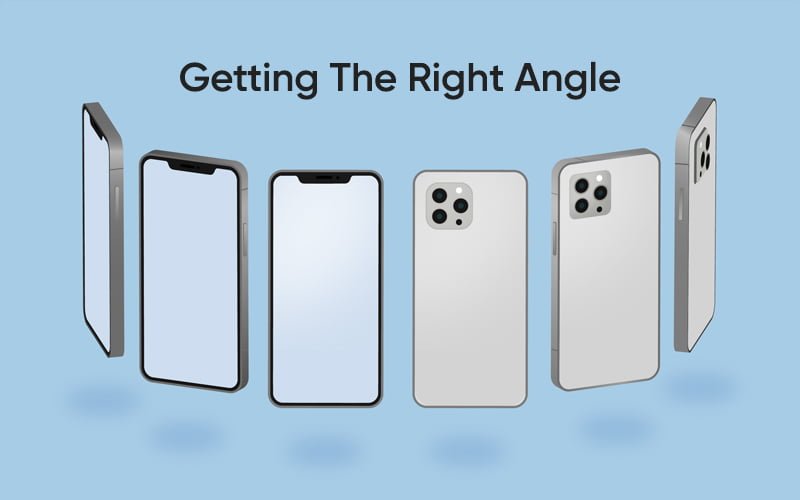
Multiple images per product dramatically outperform single-image listings. Shoppers want to see the product from different angles, understand its scale relative to familiar objects, see it in use in a real-world context (lifestyle shots) and examine fine details up close. Each additional image reduces purchase uncertainty and increases the likelihood of conversion.
3. Increase Engagement rate
High-quality product images do not just attract attention — they hold it. And in the context of eCommerce SEO, the time a visitor spends on your product pages is a meaningful signal. Google measures user engagement through metrics like dwell time (how long a visitor stays on a page after arriving from search results) and bounce rate (whether a visitor immediately returns to search results without interacting). Poor product images are one of the primary reasons visitors bounce — the page simply does not give them enough confidence to explore further.
When professional photography keeps visitors on your product pages longer, exploring multiple images, reading descriptions, checking size guides and ultimately adding to cart, Google interprets this engagement positively and rewards the page with better rankings over time.
Photography also directly drives social sharing and backlinking — both of which feed into SEO authority. Compelling product images get shared on Pinterest, Instagram and lifestyle blogs, often with links back to your product pages. These organic backlinks — earned through the quality of your visual content rather than active outreach — accumulate into genuine SEO authority that benefits your entire domain.
4. Meet Customer Expectations
Accurate, high-quality product photography is one of the most effective tools for reducing return rates — and returns have a direct, often underestimated impact on eCommerce profitability and SEO performance.
When product images accurately represent colour, scale, texture and material, customers arrive with accurate expectations. They know what they are getting. When images are misleading — whether through over-editing, flattering angles that obscure defects, or a single stock-style photo that fails to convey what the product is actually like — customers return products at far higher rates. Studies indicate that a significant proportion of all online returns happen because the product did not match the customer’s expectation set by the photography.
Returns are expensive in every dimension: fulfilment costs, inventory disruption, customer service time and negative reviews. High return rates also suppress repeat purchase behaviour — a customer who has been disappointed by a product that did not match its images rarely buys from that store again. For eCommerce stores investing in SEO to drive traffic, a high return rate erodes the value of every visitor acquired.
Detail photography — macro shots showing fabric texture, stitching quality, hardware finish, or product dimensions alongside a reference object — is one of the most effective ways to align customer expectations with product reality and measurably reduce return rates.
5. Helps you in multi-channel online marketing
Product images created for your eCommerce website are not single-use assets. When properly produced, they become the visual foundation of every marketing channel your business operates across — and the quality of those images directly affects performance in each channel.
Google Shopping — Product images are one of the most visible elements in Google Shopping listings. A high-quality image with a clean background, clear subject and accurate colour representation consistently generates higher click-through rates than blurry, cluttered, or stock-style alternatives. Since Shopping ads are pay-per-click, a better image means more clicks for the same spend — directly reducing cost per acquisition.
Social media commerce — Instagram, Pinterest and Facebook are visually driven platforms where product imagery is the primary purchase driver. High-resolution, lifestyle-context images perform significantly better than plain product-on-white shots in social feeds, where the competition for attention is intense. Instagram Shopping and Facebook Shops pull product images directly from your eCommerce catalogue — meaning the photography investment made for your website immediately extends to social commerce.
Google Ads and remarketing — Display campaigns and remarketing ads that use professional product photography consistently outperform those using amateur images in click-through and conversion rates. Many PPC management agencies report that image quality is one of the most impactful variables in display campaign performance, second only to targeting.
User-generated content (UGC) — When customers share their own photos of your products on social media, they create authentic social proof that professional photography cannot replicate. Encouraging UGC through post-purchase emails, loyalty incentives, or branded hashtag campaigns generates a stream of real-world imagery that supplements your professional shots and builds community credibility around your brand.
Types of Product Photography Every eCommerce Store Needs
Not all product images serve the same purpose. A complete product photography strategy combines multiple image types, each designed to answer a different question in the buyer’s mind:
1. Clean Background / Studio Shots The standard white or light-grey background product image is the foundation of every eCommerce listing. It eliminates distraction, allows the product to be seen clearly in its true colours and is required by most marketplaces (Amazon, Flipkart, Google Shopping) for primary listing images. Consistency across all products on a white background also creates a polished, professional look throughout your catalogue.
2. Lifestyle Photography Lifestyle images show the product in context — in use, in a real environment, styled alongside complementary items. A chair photographed in a beautifully lit living room sells differently from the same chair photographed alone on a white background. Lifestyle photography answers the question “how will this look in my life?” — which is often the final piece of confirmation a buyer needs before purchasing.
3. Detail / Close-Up Shots Macro photography of fine details — fabric weave, hardware quality, stitching, print clarity, surface finish — communicates craftsmanship and quality that cannot be conveyed in a full-product shot. Detail images are particularly important in fashion, jewellery, furniture and electronics categories where tactile quality is a purchasing driver.
4. Scale Reference Shots One of the most common causes of returns is size misperception. Including a shot of the product alongside a familiar reference object (a hand, a coin, a standard piece of furniture) or worn by a model of specified dimensions gives buyers the spatial understanding that dimension tables alone cannot provide.
5. 360° Photography and Video Interactive 360° product viewers — where the buyer can rotate the product using their cursor — have been shown to significantly increase conversion rates and reduce returns, particularly for footwear, electronics and home goods. Short product videos (15–30 seconds showing the product from all angles or demonstrating a key feature) are increasingly favoured in mobile shopping contexts and perform extremely well in social media advertising.
6. Variant Photography If your product comes in multiple colours, sizes, or configurations, each variant should have its own dedicated imagery. Switching between colour options and seeing the same product image change with the selection increases purchase confidence and reduces the abandonment caused by uncertainty about how a specific variant will look.
Things to consider before your product photoshoot
Things to Consider Before Your Product Photoshoot
Preparation before a product photoshoot determines the quality and consistency of the output. Rushing into shooting without a clear plan results in inconsistent images, reshooting costs and missed coverage of essential shots. Here is what to plan for:
Background and environment A white or light neutral background is the standard for eCommerce primary images because it is clean, versatile and required by major marketplaces. Use a large sweep of seamless paper or a lightbox for smaller products. For lifestyle shots, plan locations and sets that are consistent with your brand aesthetic — a luxury brand should not have lifestyle images that look improvised or cluttered.
Lighting setup Lighting is the most technically consequential element of product photography. Natural light can work well for some categories but is difficult to control consistently. Professional continuous LED lighting or strobe setups give you full control over intensity, colour temperature and shadow. Avoid mixed lighting sources (natural + artificial) which create colour casts that are difficult to correct in post-production. For products with reflective surfaces (jewellery, electronics, glassware), diffused softbox lighting eliminates harsh reflections while maintaining clarity.
Angles and shot list Plan a shot list before the shoot day, specifying every angle and image type needed for each product. A typical complete set for a clothing product might include: front flat lay, back flat lay, front on model, back on model, collar or detail close-up, packaging shot and one lifestyle image. Having a documented shot list ensures nothing is missed and makes the shoot faster and more cost-efficient.
Product preparation Products should be clean, pressed, assembled and in perfect condition before the shoot. Jewellery should be polished. Clothing should be steamed or ironed. Electronics should be fully assembled and powered on if screens need to be shown. Small imperfections are invisible in person but become prominent under professional lighting and close-up optics — so inspect every product carefully before it goes in front of the camera.
Post-production plan Great post-production elevates good photography into exceptional photography. Budget for professional retouching: background removal or clean-up, colour correction to ensure digital accuracy, dust and blemish removal and image resizing for multiple use contexts (web, social media, print). Establish a consistent post-production style guide so all edited images have the same tone, contrast and colour treatment — creating visual consistency across your entire catalogue.
How to optimize your product photographs for search engines
This is where product photography directly intersects with eCommerce SEO services. Every image on your product pages can either contribute to your rankings or silently drag them down. Here is a complete optimisation framework:
1. File Naming Before uploading any image, rename the file to include relevant descriptive keywords. womens-red-leather-tote-bag-front.jpg gives Google significantly more context than IMG_4821.jpg. Use hyphens between words (not underscores), keep names concise and include the product name and variant where relevant.
2. Alt Text Alt text (alternative text) is the written description attached to an image in the page’s HTML. It serves two SEO purposes: it tells Google what the image depicts, creating ranking opportunities in Google Image Search; and it provides accessibility for visually impaired users who rely on screen readers. Every product image should have unique, descriptive alt text that includes the primary keyword naturally — for example: alt="women's red leather tote bag - front view". Avoid keyword stuffing or generic descriptions like alt="product image".
3. File Format and Compression Image file size is a direct page speed factor and page speed is a confirmed Google ranking signal. Large, uncompressed images are one of the most common causes of slow eCommerce page load times. Use the following format guidelines:
- WebP — the preferred modern format, offering the best quality-to-file-size ratio; supported by all current browsers
- JPEG — appropriate for photographs when WebP is not available; compress to 70–80% quality for an optimal balance
- PNG — use only for images requiring transparency (such as product cutouts); file sizes are larger than JPEG
- Aim for product images under 150KB without visible quality loss; use tools like Squoosh, ShortPixel, or your CMS’s built-in compression
4. Image Dimensions and Responsiveness Upload images at the largest size they will realistically be displayed — typically 1000–2000px on the longest edge for product pages, which supports zoom functionality. Ensure your eCommerce platform serves appropriately scaled versions to different devices (a mobile device should not download a 2000px image to display it at 400px). Most modern eCommerce platforms (Shopify, WooCommerce) handle responsive image serving natively.
5. Product Schema Markup Schema markup is structured data code added to your product pages that helps Google understand and display your content in enriched formats. Product schema tells Google key details about the item — name, price, availability, brand, rating — and enables your product pages to appear with rich results in Google Search (star ratings, price, availability shown directly in the listing). When combined with high-quality images, rich results significantly increase click-through rates from search results. Most eCommerce platforms support product schema natively or through plugins.
6. Image Sitemaps An image sitemap — or including image data in your main XML sitemap — ensures that Google can discover and index all product images on your site. This is particularly important for large catalogues where Google’s crawlers may not reach every page organically. Plugins like Yoast SEO (for WooCommerce) and Shopify’s built-in sitemap handle this automatically.
7. Google Lens and Visual Search Optimisation Google Lens allows users to search using images rather than text — pointing their camera at a product to find where to buy it online. As visual search grows in adoption, particularly among mobile users and younger demographics, optimising product images for visual search becomes increasingly important. Clean, isolated product images on white backgrounds perform best in visual search because they are easier for Google’s image recognition systems to identify accurately.
8. Page Speed and Core Web Vitals Beyond individual image compression, the overall image loading strategy of your product pages affects your Core Web Vitals scores — which are direct Google ranking signals. Key practices include: implementing lazy loading (images load only as the user scrolls to them), using a Content Delivery Network (CDN) to serve images from servers close to the user and deferring off-screen images to prevent them from blocking the initial page render. For most eCommerce stores, images are the single largest contributor to page weight and load time — making image optimisation the highest-impact technical SEO improvement available.
Product Photography and Google Shopping: Why Image Quality Affects Paid Performance Too
Google Shopping — the product listing ads that appear at the top of Google search results — is one of the most commercially important channels for eCommerce businesses. And your product images are the most visible element of every Shopping listing.
Unlike text-based ads, Shopping listings are primarily visual. When a shopper searches “blue denim jacket women” and sees a row of product images at the top of the results page, their click decision is made almost entirely on the image quality, the product styling and whether the image clearly shows what they are looking for.
Google’s own Shopping policies require that primary product images meet specific standards: clear representation of the product, white or light background for apparel, no overlaid text or promotional graphics and accurate colour representation. Products that do not meet these standards are disapproved from Shopping feeds.
Beyond compliance, image quality in Shopping has a direct impact on click-through rate — and since Shopping ads are cost-per-click, a better image that earns more clicks for the same spend means a lower effective cost per acquisition. For businesses running eCommerce PPC services, the product photography investment made for organic SEO immediately pays dividends in paid campaign performance as well.
Product Image SEO Checklist for eCommerce Stores
Use this checklist before publishing or updating any product page:
Photography quality:
- Primary image uses clean white or light background
- Multiple angles covered (front, back, sides, close-up detail)
- Lifestyle image included for context
- Scale reference included (model dimensions noted, or reference object)
- All images are sharp, well-lit and colour-accurate
- Variants (colours, sizes) have individual images
Technical optimisation:
- Image files renamed with descriptive, keyword-rich filenames (hyphens between words)
- All images saved in WebP format (or JPEG at 70–80% quality as fallback)
- File sizes under 150KB without visible quality loss
- Alt text written for every image — descriptive, includes primary keyword naturally, unique per image
- Images uploaded at appropriate dimensions (1000–2000px longest edge for zoom support)
- Lazy loading enabled on product page images below the fold
SEO and structured data:
- Product schema markup active on all product pages
- Image data included in XML sitemap
- Google Search Console checked for any image indexing errors
- Page speed tested (Google PageSpeed Insights) — target 80+ on mobile
Platform-specific:
- Images meet Google Shopping feed requirements (white background for apparel, no overlaid text)
- Social sharing image (Open Graph) set correctly for the product page
- Instagram Shopping / Facebook Catalogue images meet platform specifications
Product photography sits at the intersection of conversion rate optimisation, brand building and SEO performance — making it one of the highest-leverage investments an eCommerce business can make. The returns on great product imagery compound across every channel: organic search rankings improve, paid ad click-through rates increase, social sharing grows, return rates decline and customer trust deepens over time.
In a competitive eCommerce environment, where multiple sellers may offer the same or similar products, the quality of your product photography is often the differentiating factor that turns a browsing visitor into a buying customer. It is also — when optimised correctly — the factor that determines how prominently Google features your products across search, shopping and image results.
Before investing further in eCommerce digital marketing services, make sure the foundation is in place: great products, great photography and a website that shows both at their best. If you would like support with eCommerce SEO — including product page optimisation, image SEO and Google Shopping feed management — Digital Hive is ready to help. Contact our team today for a free consultation.
FAQs
High-quality product photography helps attract customers, improve trust, increase engagement and enhance the overall shopping experience on eCommerce websites.
Optimized product images improve page engagement, reduce bounce rates, increase image search visibility and support better rankings on Google.
eCommerce Product Photoshoot for SEO involves creating high-quality, optimized product images that improve website performance, user experience and search engine visibility.
Yes, professional product images help customers understand products better, build confidence and improve conversion rates for online stores.
Compressed and properly formatted images improve website loading speed, which enhances user experience and positively impacts SEO performance.
Absolutely. Multiple product images from different angles help customers make informed buying decisions and improve engagement on product pages.
Yes, optimized filenames, alt text, image sizes and structured image SEO help products appear in Google Image Search results.
Digital Hive helps businesses improve their eCommerce success by focusing on both visual appeal and SEO performance. High-quality product photos play a major role in attracting customers and building trust. Our team helps optimize product images with proper sizing, compression, alt tags and SEO-friendly file names to improve website speed and search visibility. Along with this, we optimize product pages, user experience, mobile responsiveness, and overall eCommerce SEO strategy to drive more traffic and conversions. With Digital Hive’s data-driven approach, your online store can attract the right audience and improve sales growth.