Web Maintenance is an ongoing process. In fact, your website is never truly “done.” It is a living digital asset that needs consistent attention to remain secure, fast, visible on search engines and relevant to your audience. You would not build a house and then never mow the lawn, repair the roof or check for leaks. The same logic applies to your website.
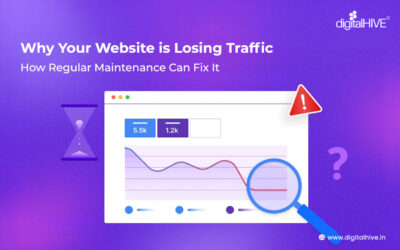
Neglected websites quietly accumulate problems, outdated plugins, broken links, slow load times, security vulnerabilities, until one day a visitor lands on a broken page, a hacker exploits a loophole or Google quietly drops your rankings. By then, the cost of fixing the damage far exceeds what routine web maintenance would have cost.
In this post, we cover the key reasons why web maintenance services should be a non-negotiable part of your digital strategy, not an afterthought.
Warning Signs Your Website Needs Immediate Attention
Warning Signs Your Website Is Being Neglected
Before we dive into the reasons why web maintenance matters, it helps to know what a neglected website actually looks like. If any of the following sound familiar, your web maintenance is well and truly on the back burner:
- Pages load slowly – anything over 3 seconds causes significant visitor drop-off
- Your SSL certificate has expired – browsers now flag these sites as “Not Secure,” immediately destroying visitor trust
- Plugins or themes are running outdated versions – these are the most common entry points for hackers
- You have broken links or 404 errors – these frustrate visitors and signal poor quality to search engines
- Your website does not display correctly on mobile – with over 60% of web traffic coming from mobile devices, this is a serious conversion killer
- Your content still references old offers, outdated pricing or former team members
- You cannot remember the last time you ran a backup
If two or more of these apply to your website, read on the sections below explain exactly why each one matters and what regular maintenance can do about it.
1. Integration with Newest Tools and Algorithms
Search engines like Google update their ranking algorithms hundreds of times each year. While most updates are minor, core updates can significantly reshuffle search rankings and websites that have not been technically maintained tend to lose ground quickly.
Regular web maintenance ensures your site stays aligned with the latest SEO best practices. This includes updating your sitemap, fixing crawl errors, improving Core Web Vitals scores (which Google uses as direct ranking signals) and ensuring your website loads efficiently across all devices.
Beyond search engines, the digital tools your website relies on, such as analytics platforms, payment gateways, CRM integrations and marketing automation plugins, are also continuously updated. An unmaintained website can experience broken integrations and data loss simply because a third-party tool released an update that your outdated code can no longer support.
Adequate website AMC will help you adapt to evolving algorithm demands, keep technical SEO in order and ensure that every tool connected to your website is functioning as intended, positioning your business for sustained organic traffic growth.
2. Website Safety
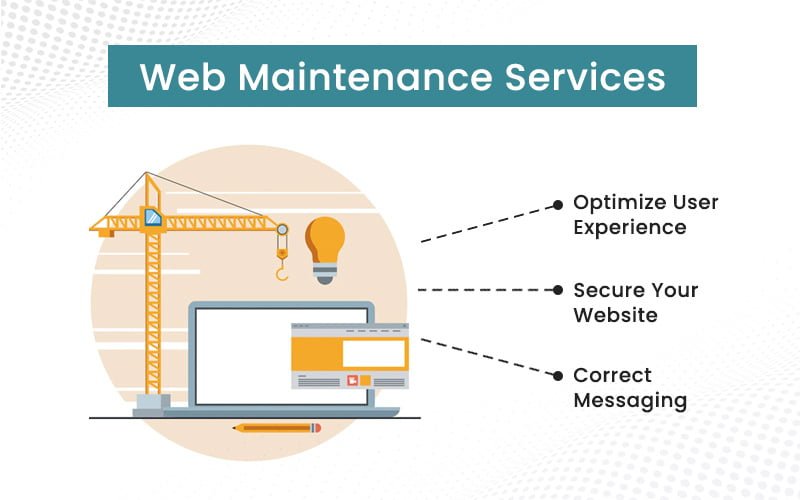
Most modern websites have thousands of lines of code and rely on software that is installed on your web hosting server. Hackers frequently discover vulnerabilities in code and attempt to exploit them. You can help prevent this by keeping the software on your web hosting server and your website up to date with the latest patches and security releases. Even if your website is hacked, you must eliminate the virus, clean up the website and restore the data. You cannot be completely safe from viruses and ‘evil doers,’ but if you have kept up with regular maintenance, you will be in a better position to quickly clean it up if it is hacked.
The scale of the threat is larger than most businesses realise. Cyberattacks on small and medium businesses have risen sharply in recent years and a significant portion of those attacks succeed not through sophisticated hacking, but simply by exploiting outdated software, the kind of vulnerability that a routine maintenance update would have closed.
Key security maintenance tasks that should be performed regularly include:
- CMS and plugin updates – WordPress alone powers over 40% of websites globally, making unpatched plugins a prime target
- SSL certificate renewal – ensures encrypted, secure data transmission between your site and its visitors
- Malware scanning – automated scans that detect and flag suspicious code before it causes damage
- Regular backups – a clean, recent backup is your best insurance policy if the worst happens
- Two-factor authentication and access audits – ensuring only authorised users can access your website backend
A single security breach can result in stolen customer data, a Google “deceptive site” warning plastered on your homepage, or complete loss of your website. The reputational damage alone can take months to recover from making consistent security maintenance one of the highest-ROI investments a business can make.
3. Enhance the visitor experience
Your website is a public representation of your company’s image. Because people frequently research a company’s website and social media sites before taking further action, it is often the first impression a potential new client has of your business. It’s critical that your website meets the viewer’s expectations as an extension of your business!
Your brand, as well as the image you want to present to both current and potential customers, will suffer greatly if your website is not operating properly. Examine the look and feel of your website on a regular basis and update it to match your brand image.
Visitor experience is also directly tied to website performance metrics. A page that takes four seconds to load loses nearly half its visitors before they even see your content. Images that are not optimised for web, redundant scripts that slow rendering, or a layout that breaks on certain screen sizes, these are all maintenance issues, not design issues.
Regular maintenance allows you to conduct ongoing UX audits: checking that contact forms are working, that navigation links lead to the right pages, that calls-to-action are visible on mobile and that any new content added to the site is properly formatted and consistent with your brand. Small friction points, left unaddressed, accumulate into a poor overall experience that sends potential customers straight to a competitor.
4. Assist in Customer Acquisition and Retention
This can assist you in optimizing the performance of your website. A web maintenance services plan can include mechanisms for monitoring website speed and preventing performance issues in the future. An out-of-date website can cause friction and frustration in the user experience, causing a customer to go elsewhere.
Working with a company that understands the value of monitoring and maintaining optimal website performance will help you provide a seamless, positive experience that will keep customers coming back.
Consider that a returning customer who visits your website and finds it slow, broken or visually outdated will question whether your business itself is still reliable. Website performance is a proxy for business quality in the eyes of the visitor. A consistently well-maintained website, on the other hand, builds quiet confidence, it signals that you are attentive, professional and invested in the customer experience.
Maintenance also enables ongoing conversion optimisation. By monitoring analytics, page drop-off rates, form submission errors, heat maps, you can identify exactly where visitors are leaving and fix those friction points before they cost you more leads.
5. Avoid Expensive Mishaps
Neglecting it increases the chances of it running slowly, crashing, or experiencing a cyber security breach, all of which can harm your reputation and cost you customers, revenue and time.
Hiring a team dedicated to handling the website reduces the possibility of costly errors, giving you peace of mind that everything is running smoothly. If an issue arises, having a team on your side to resolve it will save you from scrambling to resolve it on your own. Along with avoiding these errors, you’ll save time, energy and other resources.
To put the cost in perspective: recovering a hacked website can cost anywhere from tens of thousands to lakhs of rupees depending on the extent of the breach, compared to a monthly web maintenance plan that costs a fraction of that. Emergency developer rates for fixing a crashed website are typically three to five times higher than the cost of the same work done proactively as part of a maintenance cycle.
Beyond direct costs, there is also the cost of downtime. Even a few hours of website unavailability during business hours can mean missed enquiries, lost eCommerce orders and a damaged impression on anyone who tried to visit your site during that window. Search engines also take note of repeated downtime, it can directly impact your rankings over time.
6. Frequent Content updates
“Regular web maintenance is not just about fixing bugs or updating content; it’s about nurturing your digital presence and ensuring that your website remains a reliable and engaging platform for your audience. Just as a well-tended garden requires consistent care to flourish, so too does a website demand regular maintenance to thrive in the ever-evolving digital landscape.”
It is critical that the content on your website is regularly updated through web maintenance services so that visitors will return. A consistent update of relevant content not only makes your website more interesting but also helps your site rank high in Internet searches.
Website Maintenance Checklist
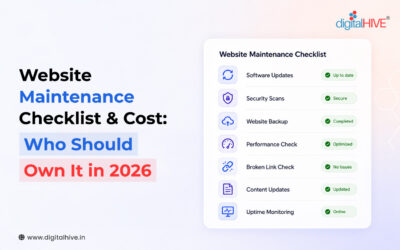
A professional web maintenance services plan is not a single task, it is an ongoing cycle of checks and updates across different timeframes. Here is a practical overview:
Weekly:
- Check website uptime and loading speed
- Review and respond to contact form submissions and spam filters
- Scan for malware or security alerts
- Monitor Google Search Console for crawl errors or manual actions
Monthly:
- Update CMS (WordPress, etc.), themes and all plugins
- Test all forms, checkout flows and key CTAs
- Review page speed scores and fix new issues
- Back up the full website (files + database)
- Check for broken links and 404 errors
- Review analytics for unusual traffic drops or bounce rate spikes
Quarterly:
- Full content audit update outdated information, offers, pricing and team details
- Review and refresh meta titles and descriptions
- Run a mobile responsiveness check across key pages
- Assess website design for relevance to current brand guidelines
Annually:
- Review hosting plan and renew domain and SSL certificates
- Evaluate whether the overall website structure still supports your business goals
- Consider a design refresh or full redesign if UX has fallen behind competitors
Having a team handle this cycle systematically ensures nothing slips through the cracks and that your website continues to work as hard for your business as you do.
Routine services provide an excellent opportunity to fine-tune your content to stir up the interest of your site’s visitors and, as a result, generate more leads and increase conversion rates. Content on website can include the following:
- Frequent update of newly launched products or any services.
- Updating the team Members related data or company news and update is critical for your website.
- Financial information update is required as per the compliance applicable.
- Updating any changes made to the contact details of the company.
Attempting to manage your own website is akin to attempting to service your own car. Some business owners can handle basic tasks, but the majority are better served by professionals who have the tools, expertise and systems to do it right every time.
Your website is often the first point of contact between your business and a potential customer. It works 24 hours a day, 7 days a week, on your behalf. Leaving it unmaintained is not a neutral decision; it is an active risk to your revenue, reputation and search rankings.
Digital Hive provides comprehensive web maintenance services including content updates, plugin and security management, bug fixing, performance monitoring, backup management and company news updates. If you are ready to take website maintenance off the back burner and put it where it belongs, front and centre of your digital strategy, get in touch with our team today.
FAQs
Web maintenance services include regular updates, security monitoring, backups, bug fixes, speed optimization and performance checks to keep a website running smoothly.
Web maintenance helps improve security, prevent downtime, enhance user experience and ensure your website performs efficiently across all devices and browsers.
A website should ideally be maintained regularly through weekly updates, monthly performance checks, security scans and ongoing content or plugin updates.
Yes, regular web maintenance improves web page speed, mobile responsiveness, security and technical performance, which positively impacts SEO rankings on Google.
An unmaintained website can face security vulnerabilities, broken features, slow loading speed, outdated content and lower search engine visibility.
Yes, website maintenance services typically include plugin updates, malware scans, firewall monitoring, backups and security patches to protect the website from threats.
Absolutely. WordPress websites require regular updates for themes, plugins and core files to ensure compatibility and security.
Digital Hive helps businesses keep their websites secure, fast and high-performing through proactive website maintenance services. Our team handles regular software updates, security monitoring, website backups, bug fixes, performance optimization, SEO health checks and content updates to ensure your website runs smoothly at all times. Neglecting web maintenance can lead to slow performance, security vulnerabilities, broken functionality and poor user experience, all of which can impact traffic and conversions. With Digital Hive’s Website AMC and maintenance services, businesses can prevent issues before they become costly problems while ensuring consistent website performance, better search visibility and improved customer trust.