Did you know that if you randomly visit any website on the internet, there is nearly a 50% chance it is powered by WordPress? WordPress now powers over 43% of all websites on the internet, a figure that has grown consistently every year since the platform launched as a blogging tool in 2003. Today, it is the world’s most widely used Content Management System, trusted by everyone from independent bloggers and local businesses to major eCommerce stores and global publishing organisations.
WordPress’s dominance is not accidental. The platform was built with content creation and discoverability at its core and those values align almost perfectly with what search engines reward. When combined with professional SEO services, a WordPress website becomes one of the most powerful organic lead-generation tools a business can own.
The core strength of WordPress lies in its content management flexibility. Non-technical users can publish, update, and restructure content without touching a single line of code. This matters enormously for SEO because Google consistently favours websites that are updated frequently with fresh, relevant content. A website last updated six months ago is treated very differently by search engines from one that is regularly maintained with new pages, posts and optimised content.
WordPress has also evolved in lockstep with how search engines work. Regular core updates from its global developer community ensure the platform stays aligned with current search engine standards, from mobile-first indexing to Core Web Vitals to structured data support. This makes WordPress not just an SEO-compatible platform, but genuinely one of the best CMS choices available for businesses serious about organic rankings.
In this blog, we break down exactly why SEO services work so well on WordPress websites and what specific features and practices make WordPress the platform of choice for businesses investing in long-term search visibility.
6 Reasons Why WordPress Is Suitable for SEO
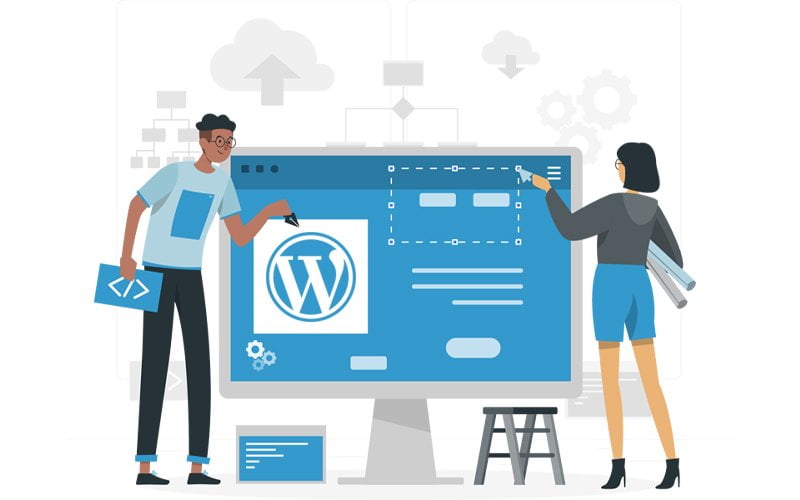
1. Optimized Permalinks:
Permalinks are the permanent URLs of your website’s individual pages, posts and category archives. On WordPress, these are fully customisable from the dashboard, a significant SEO advantage over platforms that generate unreadable, auto-coded URLs by default.
Permalinks influence your rankings in two important ways. First, keywords within the URL are a recognised ranking signal, a URL that contains the target keyword is more relevant to a search query than one that contains only numbers or random strings. Second, a clean, readable URL improves click-through rate from search results because users can instantly understand what the page is about before they click.
What a poor permalink looks like: digitalhive.in/?p=1274
What a well-optimised permalink looks like: digitalhive.in/seo-services-for-wordpress-websites/
WordPress allows you to set your permalink structure to use the post name by default, which is the recommended setting for SEO. When creating individual posts and pages, best practice is to keep the URL short, include the primary keyword, use hyphens (not underscores) between words and avoid stop words like “and,” “the,” or “of” where possible.
This level of URL control is built into WordPress natively, no additional plugins or developer involvement required.
2. Easy to Add Metadata
Your SEO title and meta description are two of the most important on-page elements for both search engine rankings and click-through rate from search results. The SEO title tells Google what the page is about; the meta description is the short summary that appears beneath your link in search results and directly influences whether a user chooses to click.
WordPress makes adding and editing metadata straightforward for every post and page — especially when paired with a dedicated SEO plugin.
Yoast SEO and Rank Math are the two most widely used WordPress SEO plugins and both provide an on-page interface that allows you to set custom SEO titles, meta descriptions, canonical tags, schema markup and more, directly within the page editor, without any technical knowledge.
Yoast SEO is the older and more established of the two, with a familiar traffic-light analysis system that scores your on-page SEO and readability in real time. It is particularly strong for content-heavy websites and publications.
Rank Math is newer and more feature-rich out of the box, offering structured data support, Google Search Console integration and keyword rank tracking within the plugin itself. It is a strong choice for businesses that want advanced SEO functionality without purchasing premium add-ons.
Both plugins also allow you to control how your content appears when shared on social media, ensuring that the right title, description and image are shown when pages are shared on Facebook, LinkedIn, or WhatsApp.
For businesses running SEO services for WordPress websites, the metadata layer is one of the first areas optimised, because small improvements here can produce immediate improvements in click-through rate even before rankings change.
3. SEO-Friendly Graphics
Images are not just a visual element, they are a meaningful SEO asset. Properly optimised images contribute to faster page load times, better user engagement and additional ranking opportunities through Google Image Search.
WordPress makes image SEO more accessible than most other platforms through its native media management tools and a wide ecosystem of optimisation plugins.
Key image SEO practices on WordPress:
- Alt text – Every image should have a descriptive alt text that includes the relevant keyword where natural. Alt text helps Google understand what the image depicts, contributes to accessibility for visually impaired users and creates ranking opportunities in image search.
- File name – Rename images before uploading.
seo-services-wordpress.jpgis more useful to Google thanIMG_4872.jpg. - File size and compression – Large, uncompressed images are one of the most common causes of slow WordPress page speeds. Plugins like Smush, ShortPixel, or Imagify automatically compress images on upload without a visible reduction in quality.
- WebP format – WordPress natively supports WebP, a modern image format that delivers the same visual quality at significantly smaller file sizes — a meaningful page speed improvement.
- Lazy loading – WordPress has built-in lazy loading for images, meaning images below the fold only load as the user scrolls to them, reducing initial page load time.
- Image sitemaps – SEO plugins like Yoast and Rank Math can generate image sitemaps, helping Google discover and index all images on your site.
When all of these elements are in place, your images work for your SEO — not against it.
4. Great User Experience:
Google’s ranking algorithms have evolved significantly in recent years to directly measure user experience as a ranking factor. The introduction of Core Web Vitals, a set of real-world performance metrics, means that how your website feels to use now has a direct, measurable impact on your search rankings.
The three Core Web Vitals Google measures are:
- Largest Contentful Paint (LCP) – how quickly the largest visible element (typically a hero image or headline) loads. Google’s threshold for a “Good” LCP is under 2.5 seconds.
- Interaction to Next Paint (INP) – how responsive the page is to user interactions like button clicks and form inputs. A good INP score is under 200 milliseconds.
- Cumulative Layout Shift (CLS) – how much page elements unexpectedly shift while loading. A good CLS score is under 0.1.
WordPress gives businesses an exceptional foundation for achieving strong Core Web Vitals scores. The platform’s extensive theme marketplace, from lightweight, performance-optimised themes like Astra, GeneratePress and Kadence to purpose-built eCommerce themes, allows businesses to choose a foundation that is already architected for speed and stability.
Page builders like Elementor and Beaver Builder allow visual customisation without the need for a developer, while caching plugins like WP Rocket and W3 Total Cache further improve performance metrics. This combination of flexibility and performance optimisation tools is unmatched by most competing CMS platforms.
5. Page load time:
Page speed is a confirmed Google ranking factor for both desktop and mobile search. A slow website does not just frustrate visitors , it is actively penalised in rankings. Google’s research has consistently shown that as page load time increases from one second to five seconds, the probability of a mobile visitor bouncing increases by over 90%.
WordPress gives you more control over page speed than almost any other CMS, through a combination of hosting choices, theme selection, caching and optimisation plugins.
Practical speed optimisation actions on WordPress:
- Choose a performance-optimised hosting provider – Managed WordPress hosting from providers like Cloudways, Kinsta, or SiteGround significantly outperforms generic shared hosting in load speed benchmarks
- Use a lightweight theme – Themes like Astra and GeneratePress are built for speed and have minimal bloat compared to feature-heavy multipurpose themes
- Install a caching plugin – WP Rocket, LiteSpeed Cache, or W3 Total Cache serve pre-built versions of your pages to visitors, dramatically reducing server response time
- Enable a CDN (Content Delivery Network) – CDNs like Cloudflare serve your site’s assets from servers close to the visitor’s location, reducing load time for geographically dispersed audiences
- Minify CSS, JavaScript and HTML – Most caching plugins include minification options that reduce file sizes without affecting functionality
- Limit plugins – Every active plugin adds load to your website. Audit plugins regularly and deactivate or remove those no longer needed
- Use lazy loading and deferred JavaScript – Ensures that assets below the fold or non-critical scripts do not block the initial page render
Page speed optimisation on WordPress is a technical but highly impactful component of professional SEO services for WordPress websites.
6. Mobile Optimization:
Google operates on a mobile-first indexing model, meaning it primarily uses the mobile version of your website, not the desktop version — to determine rankings. This has been the default for all new websites for several years and it makes mobile optimisation a non-negotiable SEO requirement rather than a nice-to-have.
The majority of WordPress themes available today are fully responsive by design, automatically adjusting layout, font sizes, image scaling and navigation for screens of all sizes. When you customise your WordPress site, the dashboard’s built-in preview mode allows you to check how every page looks across desktop, tablet and mobile before publishing, catching layout issues before visitors encounter them.
What mobile optimisation means in practice for WordPress SEO:
- Responsive layout – Content reflows cleanly without horizontal scrolling, overlapping elements, or text that is too small to read without zooming
- Touch-friendly navigation – Menus, buttons and form fields are sized and spaced appropriately for touchscreen interaction
- Fast mobile load times – Mobile connections are often slower than broadband; the speed optimisations covered in Reason 5 matter even more on mobile
- Click-to-call functionality – For service businesses, phone numbers on mobile pages should be tap-to-dial enabled, making it frictionless for mobile visitors to contact you directly
- Mobile-optimised forms – Contact and enquiry forms should be short, with appropriately large input fields and a prominent submit button
- No intrusive interstitials – Pop-ups that cover the main content on mobile are penalised by Google. WordPress allows precise control over how and when pop-ups trigger across devices
A WordPress website that performs well on mobile is not just better for users, it ranks higher, converts more visitors and generates more enquiries for the business.
WordPress SEO: Technical Issues to Monitor and Fix
While WordPress is inherently SEO-friendly, there are several platform-specific technical issues that, if left unaddressed, can undermine your rankings. A professional SEO service will audit and resolve these as a priority:
1. Duplicate content from tags and categories WordPress automatically creates archive pages for post categories, tags, authors and date-based archives. Without proper canonical tags or noindex directives, these archive pages can create duplicate content issues — where Google finds multiple pages with substantially similar content and does not know which to rank. SEO plugins like Yoast and Rank Math allow you to noindex tag and author archives easily.
2. XML sitemap management An XML sitemap tells Google which pages on your site exist and should be crawled. WordPress SEO plugins generate and submit sitemaps automatically, but it is important to ensure that the sitemap includes only the pages you want indexed, not category archives, tag pages, or low-value utility pages.
3. Orphaned pages and broken internal links As WordPress sites grow, pages can become disconnected from the internal linking structure, making them difficult for both users and search engine crawlers to find. Regular audits using tools like Screaming Frog or Ahrefs Site Audit help identify orphaned pages and broken internal links that need to be fixed or redirected.
4. Redirect management When URLs change, during a redesign or content restructure, 301 redirects must be set up to preserve SEO authority from the old URL to the new one. Plugins like Redirection or Rank Math’s redirect manager make this manageable without developer involvement.
5. Schema markup and structured data Schema markup is code added to your pages that helps Google understand the content type — whether it is a product, a review, an FAQ, a local business, or an article. WordPress SEO plugins support schema markup natively and properly implemented schema can earn rich results in Google search (star ratings, FAQ dropdowns, event listings) that significantly improve click-through rates.
6. Canonical tags If the same or very similar content is accessible at multiple URLs (such as with pagination or filtered eCommerce product listings), canonical tags tell Google which URL is the preferred version. WordPress SEO plugins handle this automatically for most cases, but custom implementations may require additional configuration.
What Do Professional SEO Services for WordPress Websites Include?
Many businesses attempt to handle WordPress SEO in-house through plugin configuration alone. While plugins like Yoast and Rank Math are excellent tools, they are the instrument — not the musician. Professional SEO services for WordPress websites go considerably further:
Keyword Research and Mapping Identifying the search terms your target audience uses at each stage of the buying process and mapping those keywords to the right pages on your WordPress site, ensuring no two pages compete with each other for the same term (keyword cannibalisation).
On-Page Optimisation Optimising title tags, meta descriptions, H1/H2 structure, image alt text, internal linking, URL slugs and content depth across all key pages, aligned with current search intent and ranking factors.
Technical SEO Audit and Fixes Resolving the technical issues outlined above: duplicate content, sitemap configuration, canonical tags, broken links, redirect chains, page speed and Core Web Vitals improvements.
Content Strategy and Blog Management Developing a content calendar targeting informational and commercial keywords, publishing optimised blog posts and building topical authority in your niche, all managed directly within WordPress.
Local SEO (for location-based businesses) Optimising your WordPress site for local search, including Google Business Profile management, location-specific landing pages and local citation building.
Link Building Earning high-quality backlinks from relevant, authoritative websites to build domain authority and support ranking improvements across target keywords.
Monthly Reporting and Performance Monitoring Tracking keyword rankings, organic traffic, conversion rates and Core Web Vitals scores, with transparent monthly reporting that connects SEO activity to business outcomes.
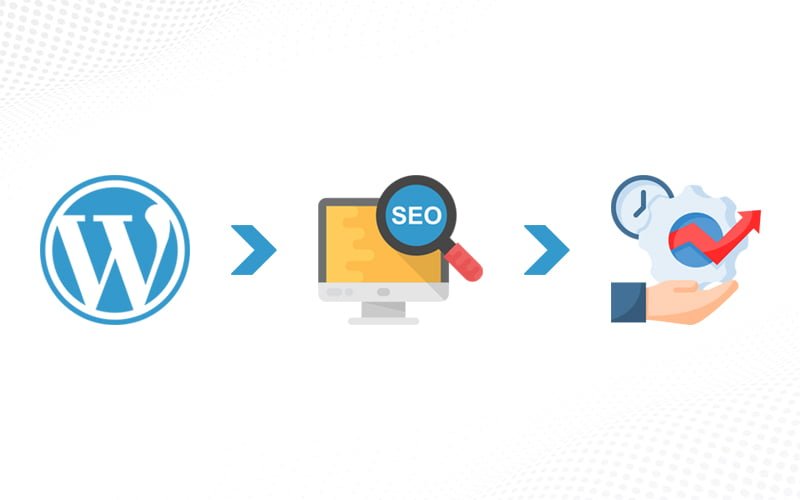
WordPress has earned its position as the world’s leading CMS precisely because it removes the technical barriers that used to stand between a business and a high-performing, search-optimised website. The platform handles much of the foundational architecture that search engines favour, clean code, fast themes, responsive layouts and extensible content management. But the ceiling for what WordPress can achieve for your organic visibility is determined by the quality of the SEO strategy applied to it.
A WordPress website without active SEO is a powerful tool sitting idle. With the right keyword strategy, technical foundation, content programme and link-building activity, that same website becomes a consistent, compounding source of qualified traffic and business leads, often for years beyond the initial investment.
If you are ready to unlock the full SEO potential of your WordPress website, Digital Hive can help. Explore our SEO packages or contact our team today for a free website audit and strategy consultation.
FAQs
WordPress websites are SEO-friendly because they offer clean code structure, customizable permalinks, responsive themes and access to powerful SEO plugins.
SEO Services for WordPress Websites include keyword optimization, technical SEO, content optimization, speed improvements, mobile responsiveness and ongoing performance monitoring.
Popular SEO plugins for WordPress include Yoast SEO and Rank Math for optimizing content and technical SEO settings.
Yes, when properly optimized, WordPress websites can perform very well on Google due to their flexibility and SEO-friendly architecture.
Fast-loading WordPress websites improve user experience, reduce bounce rates and positively impact search engine rankings and conversions.
Absolutely. Mobile-friendly WordPress websites are essential for better rankings, improved usability and stronger performance in mobile search results.
Yes, SEO services improve online visibility, target relevant keywords and help businesses attract qualified traffic and generate more inquiries and leads.
Digital Hive provides professional SEO Services for WordPress Websites including technical SEO, content optimization, speed enhancement, responsive development and long-term digital growth strategies.