SEO has long been recognised as a key marketing function, but its importance to the sales team — in particular — has been consistently underappreciated. Most businesses treat SEO as a marketing initiative and sales as a separate function. In reality, the two are deeply connected and businesses that align them consistently outperform those that keep them siloed.
Think about what a sales team actually needs to do its job: a steady flow of qualified leads, prospects who already understand the product or service, credibility that reduces the time spent building trust from scratch and visibility in front of buyers at the exact moment they are ready to purchase. A well-executed SEO strategy delivers all of these — often at a fraction of the ongoing cost of paid advertising.
It is more challenging than ever for businesses to generate leads through outbound channels alone. Cold calling, unsolicited email outreach and paid ads all have diminishing returns as audiences become more resistant to interruption-based marketing. This is where SEO services come into play — by positioning your business in front of users who are already actively searching for what you offer. These are warm prospects, not cold ones. The sales team’s job becomes considerably easier when the inbound pipeline is populated by people who came looking.
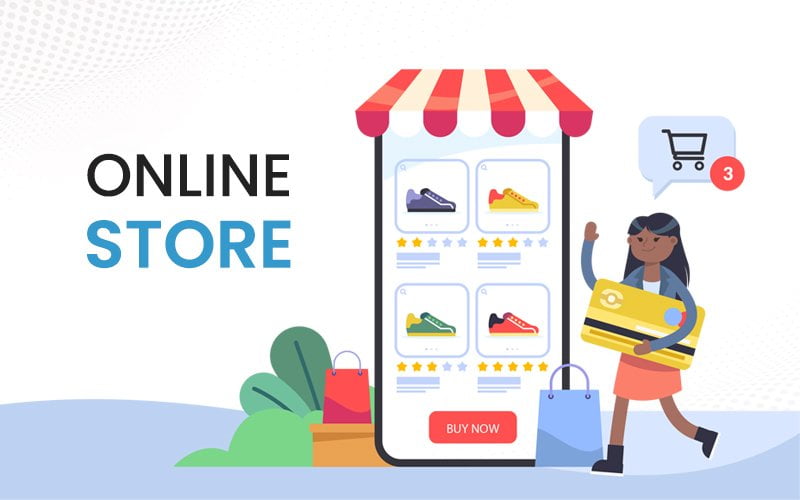
Consider this scenario: you have launched an eCommerce business selling women’s footwear. You run Google Ads, Facebook Ads and Instagram Ads to drive traffic. Results come in, but the moment you pause ad spend, traffic drops to zero. Your sales team is entirely dependent on the marketing budget staying on. Now add a strong SEO strategy to that mix. Over time, your product pages, blog content and category pages begin ranking organically. Traffic continues arriving whether or not you are running ads. Your cost per lead drops. Your sales team has a more consistent pipeline. That is the compounding advantage SEO brings to any business.
Get in front of the Right People
A strong SEO strategy is not about attracting the most traffic — it is about attracting the right traffic. There is a meaningful difference between a visitor who stumbled onto your website through a generic search and one who typed in an exact phrase that matches your service offering with high purchase intent.
Effective SEO begins with building a highly targeted keyword list that reflects how your ideal customers actually search. This means going beyond broad terms like “shoes” or “digital marketing” and optimising for intent-rich phrases like “buy women’s flat sandals online India” or “SEO agency for eCommerce in Gurgaon.” The more precisely your content matches a searcher’s intent, the more qualified the traffic your website receives — and the easier the sales team’s job becomes when those visitors convert into enquiries.
This targeting also extends across the full buyer journey. SEO allows you to be present at the awareness stage (someone researching a problem), the consideration stage (someone comparing solutions) and the decision stage (someone ready to buy). A business that shows up at each stage with the right content is not just driving traffic — it is systematically guiding prospects toward the sales team’s pipeline.
Organic Search: The Most Consistent Source of Website Traffic
Organic search is one of the most significant and reliable sources of website traffic — and unlike paid channels, it does not switch off the moment your budget runs out. For most businesses, organic search accounts for a substantial share of total website visits and the visitors it delivers are among the most high-intent of any channel.
This matters enormously to the sales team. Organic traffic tends to convert at higher rates than social media traffic because the visitor arrived with a specific goal in mind. They searched for something, found your website in the results and clicked. That level of intent is difficult to replicate through interruption-based channels like display advertising or social media boosted posts.
Google and other search engines favour brands that are consistently visible, authoritative and trustworthy in their niche. Businesses that invest in SEO services build organic visibility that compounds over time — producing traffic and leads months and years after the initial content was created. For the sales team, this translates into a pipeline that does not dry up between campaigns.
SEO promotes credibility and trustworthiness.
Sales teams spend a significant portion of their time building trust — explaining who the company is, why it is credible and why a prospect should choose it over competitors. SEO reduces that burden considerably, because a business that ranks consistently on the first page of Google already carries an implicit stamp of authority.
Consumers associate high search rankings with legitimacy. When a prospect encounters a brand organically across multiple search queries — through blog posts, service pages, case studies and reviews — by the time they reach the sales team, they have already done a significant portion of the trust-building work themselves. The conversation starts from a very different place than a cold outreach.
Building this kind of authority takes time, consistent effort and a commitment to producing genuinely useful content. It relies on earning backlinks from credible websites, maintaining a technically sound website, publishing content that answers real questions and building a positive presence in local and niche-specific search results. But when done correctly, the credibility an SEO-driven brand carries into every sales interaction is an asset that no amount of ad spend can replicate overnight.
SEO Is the Best Way to Understand Consumer Voice
One of the most underutilised benefits of SEO — particularly for sales teams — is the intelligence it generates about what customers actually want, how they phrase their needs and what objections or questions they have before buying.
Keyword research is, at its core, a window into consumer intent at scale. When you see that thousands of people are searching for “best CRM for small business India” or “affordable website maintenance plans,” you are not just seeing traffic opportunities — you are seeing the exact language your sales team should be using in calls, proposals and pitches.
Beyond keyword data, tools like Google Search Console, site analytics and heat maps show how visitors behave on your website: which pages they spend time on, where they drop off, which questions they ask before converting and what content moves them further down the funnel. This behavioural data is a direct signal of what your market values — and it should be feeding directly into your sales strategy.
Businesses that treat SEO data as a shared resource between marketing and sales teams consistently build better messaging, more relevant sales materials and sharper objection-handling scripts. The consumer voice is being spoken through search every day — SEO is simply the tool that lets you listen to it at scale.
Local SEO Increases Engagement, Traffic and Conversions
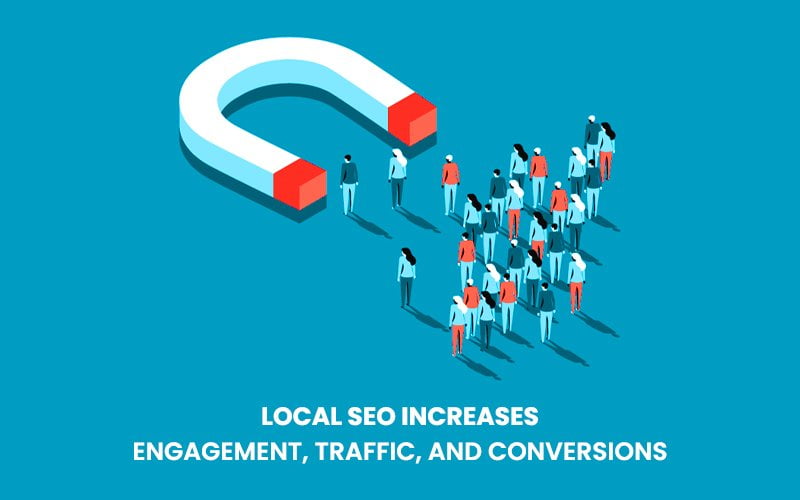
For businesses serving specific geographic areas — whether a law firm in Gurgaon, a dental clinic in Jaipur, or a web design agency in Delhi NCR — local SEO is one of the most direct and measurable contributors to sales pipeline growth.
Local SEO optimises your digital presence for location-based searches: “SEO company near me,” “website designer in Gurgaon,” “best restaurant in Sector 49.” These searches carry extremely high purchase intent. A person searching for a service “near me” or in a specific city is typically ready to act — they are not in the early research phase. Converting a local SEO visitor into a lead is therefore considerably easier than converting cold traffic from other sources.
Key local SEO activities that directly feed the sales pipeline include:
- Google Business Profile optimisation — ensuring your business appears in the local map pack with accurate details, photos and positive reviews
- Location-specific landing pages — dedicated pages for each city or area you serve, optimised with locally relevant keywords
- Review generation and management — online reviews are a critical trust signal for local buyers; a consistent review strategy directly impacts both rankings and conversion rates
- Local citations and directory listings — ensuring your business details are consistent across platforms builds authority and improves local visibility
- Localised content — blog posts, guides and case studies that reference local context, landmarks, or industry-specific needs in your target geography
The sales team benefits immediately when local SEO is working: enquiries arrive from prospects who are geographically relevant, already aware of the business and motivated to take action.
SEO Influences the Purchasing Cycle
SEO Influences Every Stage of the Purchasing Cycle
The modern buyer does not make purchasing decisions impulsively, especially for considered products and B2B services. Research conducted well before any sales conversation takes place shapes the majority of buying decisions. SEO ensures your business is present and persuasive at each stage of that research process.
Awareness Stage — The prospect realises they have a problem but may not yet know the solution. SEO-driven blog content, guides and educational articles position your brand as a helpful authority at this early stage. A business that answers the question a prospect is asking before they even know who you are starts building the relationship before the sales team is ever involved.
Consideration Stage — The prospect is now actively evaluating options. Comparison content, detailed service pages, case studies and testimonials optimised for search help your business stay visible as the prospect narrows their shortlist. A sales team whose company ranks prominently at this stage enters the conversation with a significant credibility advantage.
Decision Stage — The prospect is ready to buy and is looking for final confirmation. Reviews, pricing pages, strong calls-to-action and high-ranking service landing pages all play a role here. A business that is visible and persuasive at the decision stage converts search traffic directly into sales enquiries.
When SEO is planned with the full purchasing cycle in mind — not just the top of the funnel — it becomes a true sales enablement tool. Every piece of content serves a strategic purpose: moving the right prospect one step closer to picking up the phone or filling in the enquiry form.
SEO vs Paid Ads: Complementary Channels, Not Competing Ones
A question that sales-focused business owners frequently ask is: “If we are already running Google Ads, do we still need SEO?” The answer is yes — and understanding why is important for building a sustainable sales pipeline.
| SEO | Google / Paid Ads | |
|---|---|---|
| Cost model | Investment in content and optimisation; traffic is free once rankings are earned | Pay per click — traffic stops the moment budget stops |
| Time to results | 3–6 months to meaningful rankings; compounds over time | Immediate visibility |
| Lead quality | High — organic visitors are self-qualified | Variable — depends on targeting precision |
| Long-term value | High — rankings and content assets appreciate over time | Low — no residual value when campaigns pause |
| Trust signal | Strong — organic rankings imply authority | Moderate — users know these are paid placements |
| Best for | Sustainable pipeline building, brand authority, long-term growth | Short-term campaigns, new product launches, rapid testing |
The smartest businesses use paid ads for immediate, targeted reach and SEO for long-term, compounding visibility. Over time, as SEO rankings mature, businesses typically find their blended cost per lead decreasing — because a growing share of their enquiries are arriving organically at zero incremental cost per click.
For the sales team, this combination means the pipeline is never fully dependent on the marketing budget. Even during periods when ad spend is reduced, the organic channel continues delivering qualified enquiries built up over months of SEO investment.
How SEO and Sales Teams Can Work Better Together
The relationship between SEO and sales is most powerful when information flows in both directions. Here is how businesses can build that alignment:
Sales teams should share with SEO:
- The most common questions prospects ask before buying — these become blog and FAQ topics
- The objections that slow deals down — these should be addressed directly in landing page content
- The language customers use to describe their problems — this is gold for keyword research
- Which competitor names come up most in sales calls — these are targets for comparison content
SEO should provide to sales teams:
- A library of content assets (case studies, guides, comparison pages) that sales reps can share during the nurturing process
- Data on which search terms are driving the highest-converting traffic — these signal what problems prospects care most about
- Insights on pages with high engagement or frequent return visits — these are signals of strong prospect interest
- Competitor visibility data — showing which competitors rank for which terms helps the sales team understand the competitive landscape
When SEO and sales operate as partners rather than separate departments, the content created for organic search becomes a sales enablement toolkit and the intelligence gathered by the sales team continuously sharpens SEO strategy. The result is a self-reinforcing cycle that compounds business growth over time.
SEO is a long-term investment — but it is also one of the highest-return investments a business can make in its sales infrastructure. It delivers qualified traffic, builds credibility before the first sales conversation even begins, provides continuous intelligence about what your customers want and creates an inbound pipeline that does not switch off when your ad budget runs out.
The most successful businesses do not treat SEO and sales as separate functions. They treat SEO as the engine that keeps the top and middle of the sales funnel consistently populated — so the sales team can focus on what it does best: building relationships and closing deals.
If you are ready to make SEO a genuine partner to your sales team, Digital Hive can help. Explore our SEO packages or contact us today for a strategy consultation tailored to your business goals.
FAQs
SEO generates a steady flow of inbound, high-intent leads who have already researched their problem and are actively looking for a solution. This means sales teams spend less time on cold outreach and more time converting warm prospects who arrived ready to have a conversation.
Both serve different purposes and work best together. Paid advertising delivers immediate visibility and is ideal for short-term campaigns. SEO builds long-term, compounding organic traffic that continues generating leads even when ad budgets are paused. For sustainable sales pipeline growth, a combination of both is the most effective approach.
Meaningful organic rankings typically begin developing within 3 to 6 months of consistent SEO work. More competitive industries may take longer. However, the leads generated through organic search tend to have higher intent and convert at better rates than many paid channels, making the wait worthwhile for long-term business growth.
Content that targets decision-stage keywords — such as service landing pages, case studies, comparison guides, pricing pages and testimonials — tends to generate the highest-quality sales leads. Educational content targeting awareness-stage keywords builds the pipeline at the top of the funnel.
Local SEO directly feeds the sales pipeline for geographically targeted businesses. By appearing in local map pack results and for “near me” searches, businesses attract prospects who are ready to act — often converting at significantly higher rates than non-local organic traffic.
No — SEO generates qualified enquiries and builds trust, but it does not close deals. The sales team’s role in relationship-building, needs assessment and proposal handling remains essential. SEO simply ensures the pipeline is fuller and the leads entering it are better qualified.
Set up conversion tracking in Google Analytics and Google Search Console to attribute enquiry form submissions, phone calls and purchases to organic search traffic. Over time, you should be able to see which pages, keywords and content types are generating the most sales-ready leads.