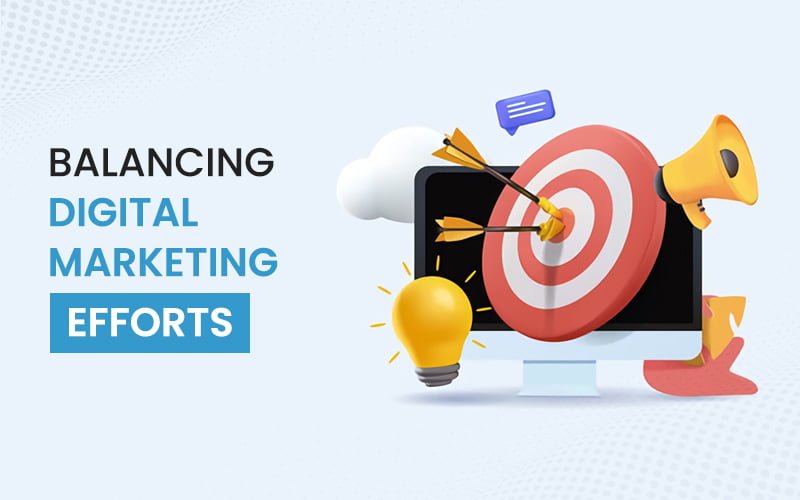
We’ll discuss how to balance your digital marketing efforts for the best outcomes in this blog post.
SEO, Google Ads, social media optimization and social media ads are all part of online marketing. Different types of organizations necessitate varying types of digital marketing plans or tactics, as well as different effort allocations in the internet marketing techniques.
SEO can be useful for businesses in niche markets with hardly any competition, and SEO services India can help these businesses build and maintain their online visibility over the long term. However, SEO is a long-term investment, and it can help such businesses maintain their rankings and outperform competitors. SEO requires both time and consistent effort to deliver good results.
When it comes to business-to-business (B2B) products or services. It is essentially the exchange of goods, services, or information between businesses rather than between consumers. A B2B transaction is a one-on-one transaction between two businesses.
There is a high level of competition for these types of businesses, therefore it’s best to use both SEO and Google Ads. Because SEO takes time, using Google Ads might get you on the front page right away. Over time, SEO will help your Google Ads efforts by building credibility and a positive brand image in the minds of your viewers.
When your company deals in B2C, it is a commerce model in which goods or services are sold directly to the end-user who purchases them for personal use.
It requires the use of SEO, social media optimization, social media ads, Google Ads and e-mail marketing in synchrony.
SEO must be consistent in order to produce good results. With the help of a PPC campaign management services, you may run ads on social media and Google and then decide what works best for your business and how to allocate the budget for both.
Every other person is using social media, so use it to communicate with your audience and share the posts that get your prospect’s attention. It’s critical to keep your audience engaged and involved by sharing new product launches, especially in lifestyle businesses.
All of the activities complement one another, but selecting the correct platform and approach for your company is critical. A consistent SEO strategy can help lower your Google Ad spent and also by keeping your audience engaged with good social media content and an interactive website can help you reduce bounce rates and improve your website’s SEO.
What is an Ideal Digital Marketing Plan
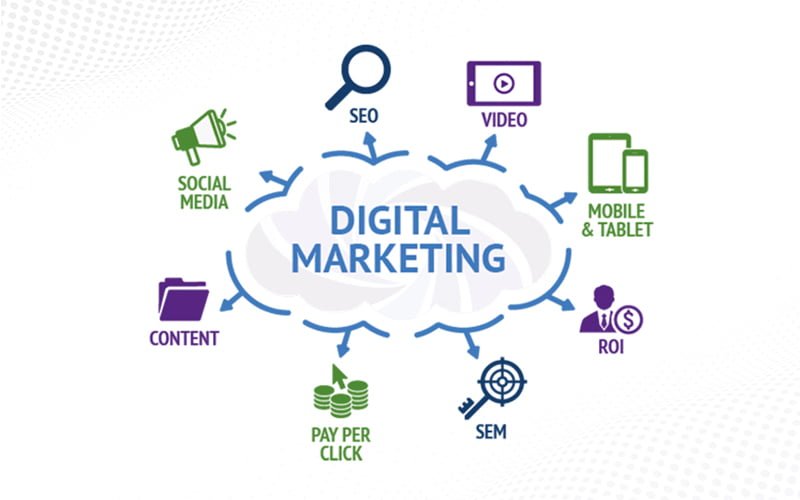
Here are 8 things that compromise an ideal and balanced internet marketing plan:
Make a brand statement.
Define your brand and how it will appear in your online marketing. Consider your brand’s USPs, tone and brand value. Outline what your brand stands for and how it stands out from the rivalries.
Create customer segments.
With bespoke buyer personas, you can figure out who your company wants to contact. Consider the demographics of your target audience, as well as the factors that lead them to choose your organization, products and services. Analyze each and every aspect of who is the suitable target audience for your business.
Set S.M.A.R.T. goals
To guide your plan, set specified, measurable, attainable, realistic and timely goals (also known as S.M.A.R.T. goals). Consider your company’s short- and long-term growth objectives. And thus put down all the goals related to your business.
Pick right platforms
Choose the finest strategy for your company. Instead of focusing on trending strategies, concentrate on the techniques or platforms that will add the most value to your company and sector.
Set a budget
To create a reasonable budget for your company, research digital marketing packages and start with a data-driven plan. Keep it agile so that you can easily make changes whenever required.
Plan out your strategy
By planning your approach, you can ensure that it succeeds. Determine your ad expenditure if you’re advertising. Create a content calendar if you’re going to be publishing content.
Start your campaigns
Launch your campaigns across channels after you’ve completed your planning with your digital marketing in Gurgaon. Ensure that all of your channels have the necessary tracking information.
The 60/30/10 Rule for Digital Channel Mix
Most businesses either spread their budget too thin across every channel or go all-in on one and wonder why growth stalls. The 60/30/10 rule gives you a simple, proven starting framework to avoid both traps.
60% — Long-Term Growth Channels Put the majority of your budget and effort into channels that compound over time. For most businesses, this means SEO, content marketing and email marketing. These channels take longer to show results but deliver the lowest cost per lead once they gain momentum. A well-ranking blog post or a strong email list keeps working for you without paying per click.
30% — Performance & Paid Channels Allocate a third of your resources to channels that deliver measurable, near-term results — Google Ads, Meta Ads, LinkedIn Ads or any platform where you pay for targeted reach. This portion of your mix funds immediate lead generation, product launches and seasonal campaigns. It should be held accountable to hard numbers: cost per lead, ROAS and conversion rate.
10% — Experimental Channels Reserve a small slice for testing. This could be YouTube Shorts, influencer collaborations, WhatsApp marketing, a new ad format, or a channel your competitors haven’t fully explored yet. Most experiments won’t work — but the one that does can become your next 30% channel.
This ratio is not rigid. A brand-new business with zero organic presence may flip it to 20/70/10 initially, leaning heavily on paid to build pipeline while SEO catches up. An established brand with strong organic rankings might shift to 70/20/10 and reduce ad spend. The point is to be intentional about where the weight sits — and to review it every quarter.
B2B vs B2C: Balancing Channels Differently
The channels that work brilliantly for a lifestyle eCommerce brand can be almost entirely wrong for a B2B services company — and vice versa. The difference comes down to decision cycles, audience behaviour and what “conversion” actually means. For an eCommerce brand, working with an experienced ecommerce seo company can also help align search visibility with the customer journey and conversion goals.
B2B Marketing — Longer Cycles, Relationship-Driven
In B2B, the buyer does extensive research before making contact. They read case studies, compare vendors, ask colleagues for referrals and return to your website multiple times before submitting an enquiry. Your channel mix needs to reflect this.
SEO and content marketing are non-negotiable for B2B. Decision-makers search for solutions to specific problems — and if your content answers those questions better than competitors, you earn their trust before the first conversation. LinkedIn is the standout paid platform for B2B, allowing you to target by industry, job title and company size. Email nurturing plays a critical role in keeping warm leads engaged over a multi-week or multi-month sales cycle. Google Ads works well for high-intent search terms like “SEO agency for manufacturing companies” but wasteful for broad awareness plays.
B2C Marketing — Shorter Cycles, Emotion-Driven
B2C buyers decide faster and are more influenced by visual content, social proof and offers. Instagram, Facebook and YouTube are where you build desire. Google Ads and Shopping campaigns capture people actively searching to buy. Email marketing drives repeat purchases and loyalty. SEO remains important for product and category pages, but the emotional pull of social content often triggers the initial awareness.
The key difference in channel balance:
| B2B | B2C | |
|---|---|---|
| Top channel | SEO + LinkedIn | Instagram + Google Ads |
| Content type | Case studies, whitepapers, guides | Video, UGC, product imagery |
| Email role | Lead nurturing over weeks | Offers, re-engagement, loyalty |
| Paid ads goal | Lead generation | Direct sales + awareness |
| Social media | LinkedIn primary | Instagram, Facebook primary |
The mistake many businesses make is running a B2C playbook for a B2B product or expecting B2B results from B2C spend. Know which model you operate in — and build your channel mix accordingly.
Tools That Help You Balance Marketing Efforts
Strategy without measurement is guesswork. These tools help you track what each channel is delivering, so you can shift budget and effort toward what works.
For Tracking & Analytics
Google Analytics 4 (GA4) — The foundation. GA4 shows you where your traffic comes from, which channels drive conversions and how users behave on your website. Use the Traffic Acquisition report to compare channel performance side by side.
Google Search Console — Essential for understanding your SEO performance. Shows which queries bring users to your site, which pages rank and where you’re losing impressions to competitors.
For Paid Campaigns
Google Ads Dashboard — Tracks spend, clicks, conversions and ROAS for search and display campaigns. Use the Recommendations tab to identify wasted spend.
Meta Ads Manager — Central control for Facebook and Instagram campaigns. The Breakdown feature lets you compare performance by placement, age group and device — useful for optimising social ad spend.
For SEO & Content
Semrush or Ahrefs — Both give you keyword rankings, competitor gap analysis and backlink data. If you’re managing SEO in-house, either tool makes it significantly easier to spot where you’re losing ground.
For Social Media
Meta Business Suite — Manages both Facebook and Instagram scheduling and analytics in one place. Good for understanding organic reach vs paid reach on social.
Buffer or Hootsuite — Useful if you’re active across multiple social platforms and need one dashboard to schedule, publish and review performance data without jumping between apps.
For Reporting & Decision-Making
Looker Studio (formerly Google Data Studio) — Pulls data from GA4, Google Ads, Search Console and more into a single visual dashboard. If you or a client review marketing performance monthly, a Looker Studio report saves hours and makes the channel mix conversation far more straightforward.
The goal of these tools is not to collect more data — it is to answer one question faster: which channels are earning their budget and which ones aren’t? Review this monthly, adjust quarterly and let data drive where the 60/30/10 weight sits.
Keep Track of Progress
By tracking the performance of your strategies, you can monitor and measure their effectiveness. To maintain track of your plans and their return on investment, use Google tools like Google Analytics, Google Search Console and Google Ads (ROI). This can help you make data-driven decisions and changes wherever required.
One of the most effective ways to attract new customers and achieve your business objectives is through internet marketing these days. Online marketing is the way to go if you want to improve sales, revenue, awareness, or loyalty.
However, the planning and execution of your digital marketing strategy are critical to success. So plan out balanced digital marketing efforts that will fit well for your organization.
FAQs
The ideal budget split between SEO and paid ads depends on your business goals, competition and growth stage. Many businesses allocate around 60–70% toward long-term channels like SEO and content marketing, while 30–40% goes to paid advertising for quick traffic and lead generation. SEO builds sustainable organic growth over time, while paid ads provide immediate visibility and faster results. A balanced strategy often delivers the best ROI.
The ideal digital marketing mix for small businesses usually includes SEO, Google Ads, social media marketing, content marketing, email marketing and local SEO. SEO helps generate long-term organic traffic, while paid ads and social media bring faster visibility and engagement. The right mix depends on your industry, target audience and budget, but combining both organic and paid channels generally creates stronger and more stable growth.
Your digital marketing spend is balanced when each channel contributes measurable business results without over-dependence on one source. Key indicators include consistent lead generation, healthy ROI, stable traffic growth, lower customer acquisition costs and balanced performance between organic and paid channels. Regular tracking of metrics like conversions, traffic sources, engagement and revenue helps identify whether your budget allocation is effective.
Balancing digital marketing efforts means distributing your time, budget and resources across multiple channels like SEO, PPC and social media to achieve the best overall results.
Each channel serves a different purpose—SEO builds long-term growth, while paid ads deliver quick results. A balanced approach ensures consistent performance and better ROI.
Start by testing different channels, analyze performance and then allocate more budget to strategies that deliver the best results.
Yes, SEO builds credibility over time, while paid ads provide immediate visibility. Using both together creates a strong and sustainable marketing strategy.
Social media helps engage your audience, build brand awareness and support other channels like SEO and paid campaigns through consistent interaction.
Data helps you understand what works and what doesn’t, allowing you to optimize campaigns and make informed decisions for better performance.
Digital Hive creates customized strategies by combining SEO, PPC, social media and content marketing—ensuring every channel works together for maximum impact.
Yes, Digital Hive continuously monitors performance, optimizes campaigns and reallocates budgets to high-performing channels—helping businesses achieve better ROI and sustainable growth.