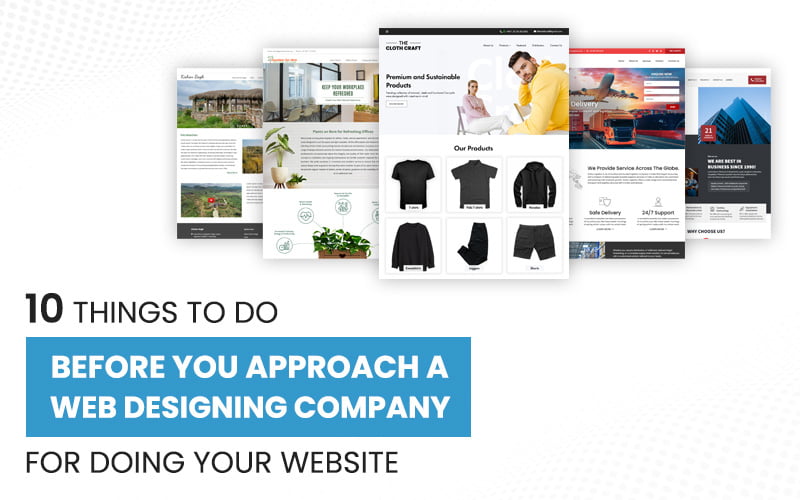
Often, there are gaps between what a Web Design Company designs and what a Customer expects. This results in too many iterations during the Website design stage resulting in loss of time for both the parties and too much rework for the design team. A lot of this can be brought down and the website can be developed at a fast pace if the requirements are clear to the person leading the Website project at the client end.
A checklist to ensure you get the Website delivered by your Web Design Company in a seamless manner:
Since a website is the global face of any business, it has to come up in sync with how the top management and promoters of the company would like to showcase the business. Take a thorough briefing from the top management (essentially from the person who is at the centre of driving business growth) regarding their expectations from the website in terms of:
- Brand Positioning
- Desired Color preferences for the website
- The main strengths of the company that need to be showcased
- Company Information to be shared
- Accomplishments / Milestones to be shared online
- What kind of details regarding the Products and Services are to be shared online
- Future vision of the Company
- Keep the updated Company Profile handy as the company profile will become the source of content for the website.
- Images and Videos of the Business infrastructure. This would include images and Videos of Offices, Manufacturing Plants (if applicable), Product images, Images of Team Members, Advisory Board and Board of Directors along with their introductions.
- Company logo: The Logo may need to be used in different ways on the website. It is always great to procure the open logo design file or an EPS file from the logo designer and hand it over to the web design agency to ensure the logo comes out well on the website without any pixelation.
- Site Map: You need to be clear as to what all sections you would like to have on the website. Eg.: About Us, Contact Us, Products, Services, Blogs, Team, Clientele, Careers, Testimonials, Investor information and so on.
- Downloadables: It is always nice to have the following downloadable files ready for posting on the website:
- Company Presentation
- Product Brochures
- Data sheets (wherever applicable)
- White Papers (wherever applicable)
It will be great to have them in place before initiating the web design process as preparing all these during website development will lead to delays in completion and launch of the site.
- The Updated list of Dealers / Distributors (if applicable) along with their contact details, needs to be prepared in advance in coordination with the concerned department / official and kept ready.
- Meet your HR Head: You would need to take from your Human resource department, the Current Openings for publishing on the Website. Also, it would be great to get from them, a writeup on Organizational Culture for putting up in the Careers section.
- Quality is key to any business. You should procure the soft copies of the Quality certifications of the company and also the Certificates of any Awards received by the company.
- Plan your CTAs (Call to Action) well.
- The Phone Nos. and Email Ids on which Business Enquiries should be directed.
- The email ids on which Resume are to be received against Job Openings posted on the website
- The Phone Nos. and Email Ids on which Customer Support requests need to go.
- The Phone Nos. and Email Ids for the CSR manager.
Remember: Web Designers and Developers at the Web Design Company you hire are unlikely to understand your business as well as you do. Your inputs and briefs as per the pointers above will be critical in ensuring the timely delivery of a high quality website that correctly positions your business on the World Wide Web!
FAQs
Preparation helps you clearly communicate your goals, expectations and requirements, ensuring the web design company delivers a website that matches your business needs and avoids costly revisions.
You should define your business goals, target audience, services and expected outcomes from the website to guide the design and development process effectively.
Knowing your audience helps create a website that meets user expectations, improves engagement and increases conversions by delivering relevant content and design.
Analyzing competitor websites helps you understand industry trends, identify gaps and gather ideas to create a more effective and competitive website.
Yes, having content ready (text, images, product details) speeds up the development process and ensures accurate messaging and structure from the beginning.
A clear budget helps you choose the right agency, avoid overspending and ensure the project scope aligns with your financial expectations.
Defining required features like eCommerce, contact forms, or booking systems helps developers build a website that supports your business operations effectively.
Success can be measured through goals like lead generation, sales, website traffic, or user engagement, depending on your business objectives.